


Learning From The Best...

Updated: Dec 10, 2020
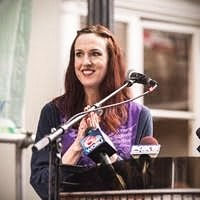
I had the opportunity to talk to a PR practitioner, Rebecca Sell, in a brief zoom interview where I attempted to pick her brain and see what I could learn about her, the field I’m passionate about, and some tips for how I could get there.
1. Background/ Education
Rebeccas sell is the current Marketing and Communications Director at French Quarter Festivals Inc., and she has been working for the company for 7 years now. Before where she is now, she worked for 6 years at Catalyst Learning Company as their marketing and communications manager. However, she wasn’t always on the public relations and communications side of things. In terms of her education, she went to Indiana University to major in English and then worked at a coffee bar. Eventually, she began using the English skills she had from her English degree to do freelance journalism because the writing skills were transferable. She enjoyed being a freelance reporter, but it wasn’t a very stable job. She was constantly on deadline, and it didn’t have many health benefits, so after Katrina, she looked for a more stable work environment. She was met with the opportunity of Catalyst Learning Company. Although she wasn’t a typical applicant they would hire for communications and marketing at this technology company, they were looking to step out of the box, and she was able to take her writing background and put it towards marketing. She explained that even though she went to school for English, not communications, everything seemed to fall into place and brought her to communications, and even though she didn’t realize she felt she had always been on this path to where she is now.
2. Company background
So now Rebecca has a job at French Qauarter Inc., and she has been there for 7 years. The company puts on a free festival in the French Quarter every year (except for COVID-19 exceptions) in April, and they also hold Satchmo Summerfest towards the end of July. She has played a crucial role in public relations and marketing for these events for years now.
3.Responsibilities
When it comes to the responsibilities that Rebecca Sell is in charge of in her role, as she puts it, she is a “department of one.” They are a generally small team that progressively adds members the closer they get to events, but in general, she does everything essentially when it comes to marketing and public relations. From the public relations perspective, she is the one building and maintaining media relationships- she said she has over 2,000 contacts even though she has not met them all in person, she has connections with every one of them. In terms of events, she is responsible for writing the company’s press releases, pitching the stories, and working with their CEO to do their actual event interviews. Overall, she described that her main responsibility for their event is a responsibility for the event’s image. When it comes to the specifics of how she manages this image, she is in charge of their 3 Facebook pages as well as all of their other social media. She handles the mailing list and consequently creates the messages that they are sending out on those mailing lists. Because their event is a free one but relies on sponsors, she is in charge of sponsor deliverables, which is imperative because it is necessary to keep their sponsors happy. And finally, digital marketing overall is something that she believes is becoming more and more involved in what she does. Overall, as I mentioned, she generally explained her responsibilities as creating the event’s image and maintaining relationships.
4.French Quarter Fest: A Day in the Life

Asking a public relations professional what a day in the life looks like is often complicated as their days can look so different- so to start, I asked about a day in the life of a festival day. On the French Quarter Fest day, her day begins at 4 am to unlock Jackson square. She is then on-site for the morning show, and she has to call to confirm guests and make sure everyone will be arriving on time. When the show ends at about 9 she has to run to another neighborhood to go to the opening day parade, which is another big and essential media event she is involved in. Her job is to greet reporters covering the parade and then ride in the parade and get social media content for their different platforms. After the parade she has to go to the main stage for the opening remarks, and even though she isn’t usually on stage, she has a great deal that she is in charge of backstage. As their public relations, she has to meet with the mayor and their sponsors, and then she must stay backstage and make sure everyone is going on stage at the right times. And the rest of the day generally consists of making rounds in between media interviews. Rebeccas explained that throughout the day between media and radio, her phone is blowing up all day, and a lot of what she has had to figure out is learning how to prioritize certain things. However, the nonstop 4 am to 9 pm event day isn’t the only kind of ‘day in the life’ of Rebecca Sell’s job.
5. A ‘Normal’ Day
A typical day is different for many PR professionals depending on the month, week, and year but I asked Rebecca Sell what her average ‘non-event day’ looked like. Of course, she said that it could range incredibly, but she said it often includes many meetings. She said that a large portion of her meetings are often strategic planning meetings with the art department as well as with marketing directors and agencies of their sponsors. An essential aspect of her job that she essentially deals with daily has to do with the company’s relationship with their sponsors because, despite being a ‘free’ event, the sponsors and their happiness are incredibly important. Making sure these sponsors’ objectives are met is very important, and her days/ meetings often consist of brainstorming with the marketing directors and agencies of their sponsors and collaborating on content. She also has some administrative tasks more related to marketing that can involve some coding like creating and programming the event schedule. She also is in charge of the app, which is involved in a ‘normal day sometimes’. But, when it comes to this field, no day is really the same as another, so she said depending on the season, she could even end the day with some kind of event to host, or she may just finish tying up some loose ends.
6. Skills
Rebecca said several skills were needed or were beneficial to have for her job. First, the first skill that she discussed that is needed for her job is the skill to specialize in social media and create good content. Along with this, she emphasized that good time management, of course, is something needed. Finally, she explained that public speaking is really important to have in your skillset with that job. She learned the hard way (on live national television) that being able to be a good public speaker when communicating with your publics and building relationships can be a crucial skill in this job.
7. Crisis Management
The final skill she believed was needed for her job that Rebecca mentioned was the one she thought was the most essential- crisis management. Rebecca had never been trained in crisis management, so when someone on the team had asked her if she had crisis management experience, she believed that she did well under pressure and would be fine. Then she eventually forced to face a crisis, and she yet again was thrown into the fire. While she agreed that being faced with a crisis is definitely a way to gain authentic experience in crisis management, she also believes that the strategies you gain if you have crisis management training prior to experiencing a crisis can vastly set you up for success. She explained that something bad will always happen, and crisis management is a significant part of PR because you need to learn to deal with crises. Specifically, one of the strategies that she brought up was being able to use can statements/non-answers. In a crisis, the media are trying to get answers, and she found that being able to use strategies she learned of answering the question practically in a way that doesn’t answer the question to buy yourself more time to think things through was a great way that crises management techniques helped her. Secondly, she also has had to learn the skill in crisis management of knowing when you don’t know something. In a time of crisis, the media will push you to get answers, and as a PR professional, in order to do successful crisis management, you need to know when to say you don’t know something.
8. COVID-19
Of course, like everyone else, COVID-19 has changed people’s lives, and of course, as someone who works for a company that works nearly year-round on two events, COVID-29 definitely had an impact on the work that she has been doing. The most significant difference she experienced with everything going on was the fact that they used much more direct communication. Instead of being strategic about how they communicated with their publics, they were forced to communicate with everyone all at once. This is because often, as the Communications and Marketing Director, she would have a very structured and scheduled way that she would like to share and release information. But, with everything going on, they had to throw that method out of the window. This global pandemic forced everyone to pivot and change the way people were doing things. One change that Rebecca found unsettling at first was that the method they would be interviewing people was completed differently than it had been before the pandemic. This is because something like an interview over the phone would have been seen as unprofessional in her field; however, it became the new normal for them after the pandemic.
9. Relationships
If there is one thing to take away from this, it’s the importance of relationships in PR. No matter what, relationships were undoubtedly the overarching theme of what Rebecca saw as a key component of PR. The root of everything in PR is relationships. Rebecca continues to see relationships as the heart of public relations and what she does. Much of what she does in one way or another in this position is maintaining relationships strategically. Rebecca has a network of people she has worked with or connected with in some way. She emphasized the importance of staying in touch, keeping strong relationships, and always building new relationships.
10. The Best and Worst of PR
PR, like anything, has its faults and its strengths. The first challenge of being in the PR field that Rebecca felt was with relationships. She felt that public relations is such a relationship reliant area that can be challenging and feel intimating when you’re just starting out. This is because, in a field where things are very dependent upon having a network in your back pocket, it can feel intimidating when you first start and don’t have that network established. The second part of this challenge Rebecca faced is that nowadays, there are so many media platforms that it can sometimes feel impossible to get people’s attention because so many people and messages are competing for attention. When it comes to the best parts of PR, in terms of events, Rebecca said, despite the hard work, there is nothing like the feeling of seeing everything from your planning come to life. Especially if people show up and are interested in something that you all had been working on for so long, just seeing an event be able to fully play out after all the hard work put in is something Rebecca found to be the best part of the job.
11. Advice
When asked about what advice to give an aspiring PR student like me, Rebecca said to learn to be adaptable. Not everything is in our control, and the sooner you accept that the easier a job in public relations will be. She is someone who likes to be organized, but she has had to accept that sometimes, you just have to roll with it because her advice to someone like me moving forward was that I need to be okay with adapting easily. The second piece of advice offered is to work on building and maintaining relationships. As she said earlier, it’s intimidating to start jobs without a network, but you are more than welcome to start creating your network in college so that once you get to the job, your network isn’t empty. All of this, of course, to say that I being adaptable and valuing the importance of creating and maintaining relationships in this field can get a PR student like me a long way.
Thank You.
It was an honor to be able to hear from such an inspiring and experienced voice in the field.


Comments